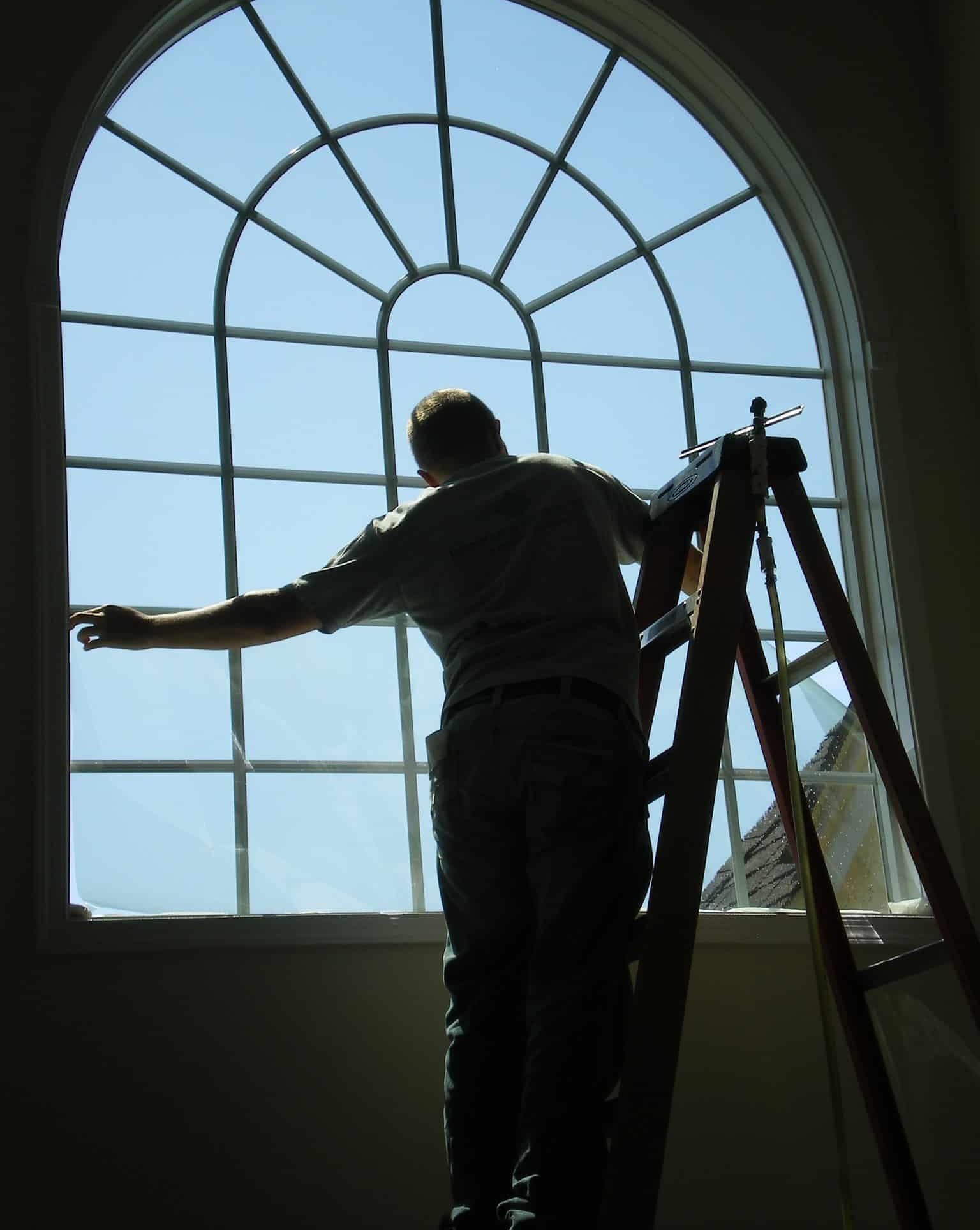
Dyed Window Film
Budget · $5-8/sq ft installed

The most affordable option.

Dyed film is the entry-level window film choice. It is right for some applications and wrong for others.

Overview

Dyed window film uses an absorption-based approach: layers of dye in the film matrix absorb solar radiation rather than reflecting it. It provides basic heat reduction and UV protection at the lowest price point. However, the dye fades over time, reducing effectiveness and eventually causing discoloration.

How it works

Dye molecules absorb visible and some infrared light, converting it to heat within the film rather than allowing it to pass into the room. Because the film absorbs heat, it can become warm to the touch. Over 3-7 years, UV exposure breaks down the dye molecules, causing the film to turn purple or fade. UV blockage and heat rejection effectiveness decline as the dye degrades.

Best for
  • Rental properties where lowest cost and acceptable short-term performance are the priority
  • Secondary or storage rooms with low visibility and low importance
  • Applications with a 5-7 year replacement expectation
  • Very tight budget constraints
Trade-offs
  • Fades and turns purple within 3-7 years, particularly in direct sun
  • Lower heat rejection than ceramic or quality metalized film
  • Absorbs heat into the film, which can increase thermal stress on the glass
  • Does not qualify for SolarGard premium warranties
  • Not recommended for primary living spaces in high-sun exposures
Questions

Frequently asked

Why does dyed film turn purple?
Dye molecules contain green and yellow pigments that degrade faster than red and blue under UV exposure. As the green and yellow components fade, the remaining colors shift toward purple. This is a cosmetic defect that also indicates reduced UV and heat performance.
How long does dyed film last before turning purple?
Quality dyed films in moderate sun exposure last 5-7 years. Direct southern exposure in southeastern PA summers can accelerate degradation to 3-4 years. Ceramic and metalized films are immune to this failure mode.
Is dyed film worth it over no film at all?
Yes. Even degrading dyed film provides significant UV blockage and heat reduction compared to bare glass. The question is whether it is worth it compared to investing in a longer-lasting ceramic or metalized film for the same windows.
Do you recommend dyed film?
We install dyed film when customers have specific budget constraints or property types where it makes sense. For primary residences and long-term commercial properties, we typically recommend metalized or ceramic film. We explain the trade-offs clearly before any installation.
Compare other film types
Not sure which film?

We will recommend the right one.